

We
breathe
soccer
breathe
soccer

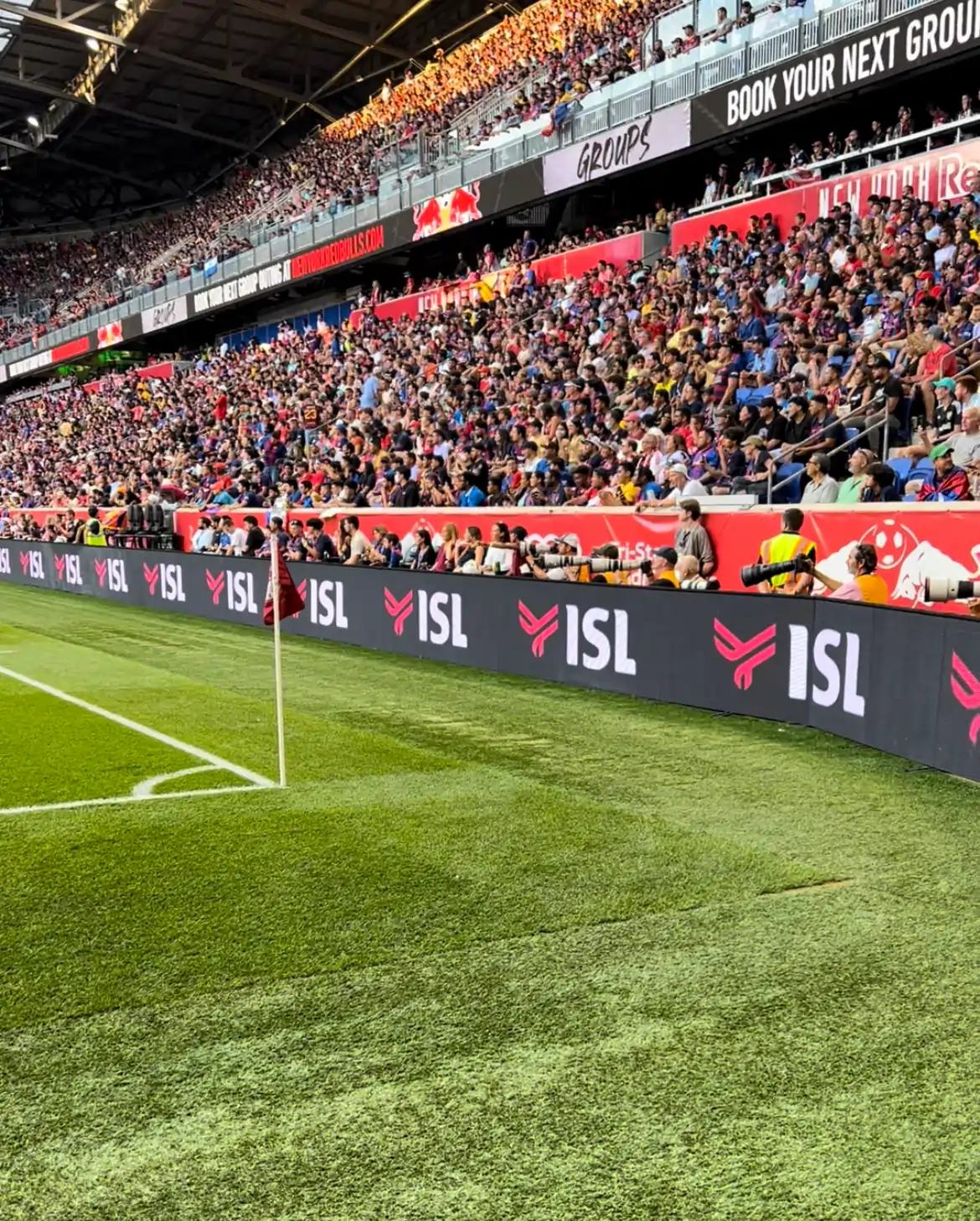
Nicole León, ISL Marketing Director, unveils the playbook on how sports properties harness and can further leverage digital marketing in their international expansion strategies. Join us for an insightful discussion as Nicole shares key insights and addresses crucial questions, shedding light on the strategies shaping global success in the digital era.
The shifts in consumer behavior within the sports industry are characterized by a substantial move towards non-traditional media channels driven by the acceleration of digital adoption. Approximately 40.7% of global sports fans now choose to stream live sports events through digital platforms. This trend signifies a significant departure from conventional methods of sports content consumption. Furthermore, there is an increased appetite for additional sports content, both related and unrelated to live matches, across an expanding array of platforms.
The demand for content related to live events, such as match announcements, short-term content, and highlights, is nearly as high as the demand for the events themselves. Similarly, non-live sports content, including docuseries and behind-the-scenes footage, has gained traction, attracting not only existing fans but also new audiences. Multi-screen viewing activities have become more prevalent, with the general population increasing its engagement in activities like social media, texting, gaming, and ordering food by an average of 5%, doubling to 10% among Gen Z, even during significant live events.
These shifts emphasize the need for brands and sports rights holders to stay connected to evolving consumer behaviors. As channel and device fragmentation continues to rise, adapting strategies to meet consumers on the right platforms and in the right ways becomes critical for successful engagement and international expansion.
The digital media platforms present football clubs with new avenues to connect and engage with fans in innovative ways directly. The immediacy of these platforms facilitates real-time communication, fostering a sense of community as fans actively participate in conversations, polls, and live events. Additionally, the global reach of digital media allows clubs to transcend geographical boundaries, connect with international audiences, and create a diverse and inclusive fan base. This not only enhances the club’s brand globally but also enables cultural exchange among fans from different regions.
Furthermore, digital platforms enable football clubs to deploy creative engagement methods, such as virtual events, exclusive behind-the-scenes content, and interactive initiatives. These strategies not only capture fans’ attention but also deepen their emotional connection to the club. The ability to personalize content delivery based on fan demographics and interests ensures a more targeted and meaningful engagement. Moreover, the analytics provided by digital platforms empower clubs to understand fan behavior, refine strategies, and make data-driven decisions, continually enhancing the overall fan experience.
In essence, digital media platforms are a dynamic tool that enables football clubs to forge direct connections, foster global communities, and explore innovative avenues for fan engagement.
The biggest challenge for sports properties in digital marketing lies in the fragmented digital landscape, making capturing and retaining fan attention increasingly difficult. As the digital space continues to diversify with various platforms and channels, reaching and maintaining a consistently engaged audience becomes a complex task for sports properties. The competition for fan attention across social media, streaming services, and other digital avenues requires strategic efforts to cut through the noise and deliver compelling content that resonates with diverse audiences.
In the fight for fan attention, the inherent power they possess to connect with fans and cultivate lifetime loyalty makes sports properties stand out. The emotional connection that fans develop with their favorite sports transcends mere fandom; it becomes a deeply ingrained aspect of their identity. This enduring loyalty provides sports properties with a unique advantage in capturing and retaining audience attention in the highly competitive digital landscape.
Additionally, the ability of sports properties, especially clubs, to create appealing and authentic storytelling sets them apart. Effective storytelling goes beyond the game itself, offering narratives that resonate with fans on a personal level. Whether through highlighting players’ journeys, historic moments, or community engagement, authentic storytelling fosters a deeper connection and emotional investment, making sports properties more memorable and compelling in the eyes of their audience.
Attracting younger fans demands a multifaceted approach for sustained engagement and growth. Football clubs can strategically optimize their digital presence by embracing popular platforms like TikTok and Instagram, tailoring content to the dynamics of each channel. Collaborating with influencers who resonate with the target demographic adds authenticity to the club’s messaging, while interactive content fosters active engagement. Aligning the club with broader cultural trends ensures relevance, and leveraging player stories and global community building enhances the overall fan experience.
However, the synergy between digital initiatives and physical engagements with clubs globally amplifies the impact of a young target. Expanding soccer clubs beyond their own territory through initiatives such as Summer Camps, Academies, and others not only fosters a sense of community but also provides tangible, real-world experiences, bridging the gap between the digital realm and reality.
These physical initiatives, complemented by digital ones, not only strengthen emotional ties but also offer opportunities for talent development, allowing clubs to identify and nurture young talents globally. By combining digital and physical strategies, football clubs create a comprehensive approach that reaches young fans on multiple levels, solidifying the club’s presence in their hearts and minds for the long term.
Having a fan base in different countries significantly expands clubs’ opportunities to generate new revenues. For European clubs, building a global fanbase serves as a strategic move to diversify their supporter base, reducing dependence on a single market. By strategically engaging fans through social media, targeted merchandise offerings, fan events, and local partnerships, clubs can cultivate a passionate and loyal following across borders.
A growing global fanbase not only enhances the club’s brand on an international scale but also contributes substantially to long-term sustainability. This diversified support base brings in additional revenue streams through various channels, including increased ticket sales for international matches or pre-season tours, elevated merchandise purchases from fans worldwide, and a boost in digital subscriptions for exclusive content and match streaming. The expansion into new markets not only broadens the financial landscape for clubs but also strengthens their overall resilience and market position in the dynamic world of football.
Developing relationships in other countries can give European clubs access to a vast talent pool. The American football landscape, for instance, has been evolving rapidly, with increased investment in youth development, academies, and professional leagues. By establishing partnerships with American clubs, scouting networks, or investing in youth academies, European clubs can tap into the American talent pool and identify potential players for their teams.
It is important to first understand the market and the culture the club wants to enter; it is not the same to expand in China and the USA, for example. Then, clubs have many possibilities for doing that, from local Summer Camps to international tours and pre-season friendlies with local clubs.
The current sports business landscape in the country, hosting the next FIFA World Cup, Olympics, and other relevant soccer events, presents substantial opportunities for European football clubs.
The United States represents a large and lucrative market where European clubs can strategically position themselves to capitalize on various revenue streams. European clubs can effectively tap into the American market by emphasizing key metrics such as revenue, sponsorship deals, and partnerships. The USA’s vast consumer base, robust economy, and deep-rooted passion for sports create significant opportunities for clubs to diversify their revenue sources beyond their home markets. Exploring avenues like merchandising, licensing agreements, and digital partnerships in the US can lead to additional income streams. Moreover, the increasing popularity of European football in the USA, driven by the growing fanbase and interest in major international competitions, further amplifies the potential for European clubs to strengthen their market presence and financial stability in the American sports business landscape.
Why do you believe the FIFA World Cup is the biggest sporting event in the world?
Although the FIFA World Cup is held every four years, it manages to capture the attention of billions of people from all walks of life and embodies national pride while providing a platform for countries to not only show off their soccer talent but also their culture, history and passion for the game. The World Cup brings people together from all over the world and is the ultimate showcase of the beautiful game filled with the biggest stars vying for the ultimate prize. It is through the significance of the FIFA World Cup that we really understand why soccer is the biggest sport in the world.
What sort of global impact does the FIFA World Cup have across different societies?
FIFA World Cup brings people together and breaks down cultural barriers, racism and social inequality, while creating a sense of unity among different countries. As I experienced in Qatar, during the World Cup, the love for football is all that matters.
What is the economic impact of the FIFA World Cup?
The FIFA World Cup has a significant economic impact, both for the host country and for the global economy. During the tournament, the host country experiences a boost in tourism as millions of fans travel to attend the games, stay in hotels, and eat at local restaurants. This leads to an increase in local economic activity, such as job creation, and can help to boost the country’s overall economic growth.
In addition to the direct benefits for the host country, the World Cup also has indirect economic benefits through increased media exposure, sponsorship deals, and the sale of merchandise and memorabilia. These factors can help to promote the host country’s brand and attract further investment.
The FIFA World Cup is one of the most lucrative sporting events in the world, with the total revenue generated by the event estimated to be over fourteen billion dollars through broadcasting rights, sponsorships, and ticket sales.
What are the different types of stakeholders involved in the FIFA World Cup?
Typically, it would be the host country, FIFA, and LOC (Local Organizing Committee). FIFA is the governing body of the tournament and is responsible for organizing other events such as the Women’s World Cup, FIFA Club World Cup and others. The LOC is responsible for organizing different events such as the opening ceremony, promoting the tournament, and generating revenue; while the host country is responsible for organizing the tournament, providing training facilities and transportation during the competition. FIFA has 6 different continental confederations: AFC (Asia), CAF (Africa), CONCACAF (North and Central America and the Caribbean), CONMEBOL (South America), OFC (Oceania), and UEFA (Europe).
Read Monica Aguado’s, Humas Resources and CFO, insightful comments about the importance of corporate meetings on an era where remote work is growing fast and is not going anywhere anytime soon.
1. First of all, can you tell us about your job as HHHR & CFO Director?
I’ve been working with ISL since the company was founded, back when it didn’t even had an Human Resources structure. It has been a big challenge to create and shape this department; it definitely has been a learning experience and it’s amazing to see how far we’ve gotten. Part of my daily tasks also includes hand-in-hand work with the CEO preparing financial reports and tracking the cash flow which is crucial to make strategic decisions.
2. Taking into account that currently most of ISL’s employees work remotely, do you consider that corporate meetings are important?
During COVID times, ISL was introduced to remote work; nowadays most of the team works remote or hybrid. Because of this, many team members interact only virtually with the rest of the team. We consider that corporate meetings, now more than ever, are a must in our annual calendar of activities.
3. Which is the main objective of a corporate meeting?
The main objective of a corporate meeting is to boost physical and emotional experiences that we may lack in a daily basis. To achieve this, during corporate meetings we organize team building activities, meetings where we recap annual results and share future projections, luncheons and other interactive activities.
.4. How many corporate meetings a year do you think are necessary for ISL?
We’ve always aimed to held 2 corporate meetings per year and we hope to maintain this frequency, even though the company keeps growing and it’s hard to find a few days in the calendar where the whole team can meet.
Read Pere Segarra’s, our director of talent relationship, take on the current player market, the skills a Professional Player must have to thrive, and the importance of mental health in the football industry.
The market is on fire, especially in MLS. There have been two-star signings for LAFC: Gareth Bale (Real Madrid) and Giorgio Bellnini (Juventus), two European legends who will make a difference in this league.
And as for Europe, there have been several star signings such as Halaan, who has signed with Manchester City, and Pogba’s return to Juve.
Many American players have the potential to enter the European market.
European clubs are interested in having young American promises to make the club grow in the United States, it is a good marketing tool, and obviously, the talent in the United States is increasing.
2. What skills should have a Tandhem player to represent him?
We mainly value the player’s professionalism and his commitment to his career. We also highly value the player’s projection and talent, but his dedication is critical.
You must be mentally strong and aware that there will be times that are tougher than others. We also consider his education and his closest environment, which are a support rather than a burden on his way.
3. And regarding mental health, is it essential that high-performance athletes take care of it?
Mental health is a taboo subject among footballers, which is not talked about enough, and it is the key and the big difference between a professional and non-professional player.
I recommend it to any player who feels that he doesn’t know how to handle pressure well, criticism, who has more negative thoughts than usual…
Certain players are affected much more than others, and due to their ego, they prefer to keep this fight quiet, and all they do is harm themselves.
Resorting to professionals will always provide a more significant improvement than any advice from someone who is not specialized.
4. Do the big teams consider physical and mental health when they are interested in a player?
Yes, both aspects are of vital importance for the clubs. The scouts of any club monitor not only the player on the field, but also his mental state, which I mentioned before: his environment, family, education…
The clubs have it very present. They discard the player if they believe that the player is confrontational or will not fit in well in the locker room because of his behavior.
Talent is what weighs the most in the balance, but each case must be taken into account individually.
On a physical level, they also study if the player has any irregularity that could cause future injuries or reduce his performance. Many millions are invested for each footballer, and the team takes care of even the smallest detail so that the operation is successful.
After the announcement of the next friendly matches of FC Barcelona in the USA, we have sat Bruno Díaz, Director of ISL’s Tours & Friendlies department, in the hot seat to find out more:
1. First of all, tell us about your work as Director of ISL’s Tours & Friendlies department.
It’s very exciting to help the clubs organize their preseasons.
We work with European, American, and Latam clubs to find each region’s best potential-friendly games.
It’s an essential time of the year for the sport and commercial departments of the clubs.
2. What are the objectives of friendlies?
Friendly games are crucial from a sports and commercial point of view.
During this time, the teams prepare themselves for the next season.
Playing against teams from different countries is always interesting.
From a commercial POV, clubs use these international tours to create brand awareness and gain more fans worldwide.
3. We recently announced a friendly match. Do you think there will be more news this season?
After two difficult years of COVID restrictions, we will finally see a lot of international games in the US and Europe for our clients.
It will be a busy summer for our team.
4. Are these matches essential for clubs?
They all need to play games to be prepared for the next season, and commercially speaking, it’s always a good source of revenue for the teams and a perfect occasion to win over more fans abroad.
On the Grill: Bruno Diaz, ISL Sponsorship Director
In May this year, FTX became the first cryptocurrency exchange to sponsor a professional sports arena in the United States – the Miami Heat Arena.
In June, Valencia CF signed an innovative shirt sponsorship deal with Socios.com, the blockchain-based fan engagement platform.
Socios.com also replaced Pirelli as front-jersey sponsor of Serie A champions Inter Milan.
In September, Inter Miami CF revealed the club’s first-ever jersey sponsor, announcing a multi-year partnership with XBTO, a world leader in cryptofinance, also compromised with creating stability for the crypto market.
The jersey partnership is among the biggest deals in MLS to date, and marks the first cryptofinance partnership deal in the league.
Will it be the first of many?
Are cryptofinance and fintech companies taking over the sports sponsorship industry?
We asked ISL Sponsorship Director, Bruno Diaz, what were his thoughts on this new sponsorship trend and how it can impact the industry.
It is a new sector with millions of potential clients – investing in cryptocurrency is something that has been captivating consumers for over a decade now, since the launch of Bitcoin in 2009.
The new wave of Fintech and Crypto companies entering sports sponsorship reminds me of when the betting industry entered the sports world. Everyone still remembers Cristiano Ronaldo wearing the Bwin jersey for Real Madrid!
Apart from generating credibility, being present on a sports entity gives the brand access to the club’s audience and fans – it is a fast and efficient way to increase brand knowledge.
For top cryptocurrency companies like FTX and XBTO, it is also very helpful to expand their message to the general public, engage new audiences and increase their interest in cryptocurrency.
Over the last years the most traditional sectors in the world of sports sponsorship have been: banking, insurances, beers and soft drinks, airlines, the automotive industry, and most recently, betting companies and videogames.
No industry has infinite resources. However, the percentage of the budget dedicated to marketing is higher in some industries, and so are the investment rounds. Which is why we are seeing startups with a big visibility in relevant sports entities – jersey sponsor, naming sponsor, etc.
I don’t think they feel threatened, even if the fintech/crypto companies occupy spaces that otherwise could have been for another brand. But I believe all industries can coexist without conflict in the sponsoring world. Our job as marketing and sponsoring specialists is exactly to make everyone happy by guaranteeing that all brands are able to transmit their message to the fans through their sponsorships.
Yes, absolutely. When a sector generates good financial results, other players show up and try to overcome the first ones. Which is why we are already seeing different fintech and crypot companies entering the market.
Considering the market trends I believe the potential of fintech and crypto companies will keep getting stronger. This will force the “traditional sectors” to be more creative in how to reach their target audiences.
I believe the future of sports sponsorship will be balanced and that most likely in 10 years we will again be seeing new sectors on sports jerseys.
On the Grill: Pol Solé
The US Men’s National Team has recently beaten Mexico in the 2021 CONCACAF GOLD CUP FINAL becoming the new soccer Champion of North and Central America.
With a sports history mostly famous for American Football, Baseball, Basketball and Ice Hockey, the US are emerging as a new soccer talent pool with several American players already playing in some of the biggest clubs in the world, such as Christian Pulisic in Chelsea FC, Sergiño Dest with FC Barcelona or Yunus Musah with Valencia CF.
Pol Solé, the ISL director of LaLiga’s first and oficial soccer recruitment program in the US – LaLiga Select – shared with us his feedback from the LaLiga select Talent IDs and Showcases held this Summer across the country.
Pol Solé: As of today, soccer is one of the biggest sports in the US and is the most played among young people. If you get your car and drive across the country, you will run into thousands of soccer fields with kids playing soccer. I have lived in the US for 6 years and I have seen a huge growth in both quantity and quality of soccer players.
Pol Solé: Yes, absolutely. Soccer has been growing exponentially over the past 5-10 years. In my opinion this growth is due to three different factors:
First, the arrival of European soccer stars to the MLS such as Beckham, Henry, Villa, Zlatan, and many more. The American soccer league and teams were followed and supported by many more people around the world.
The second factor is a consequence of the first one. Having more stars in the MLS, brings sponsors and TV rights. If you only display basketball and football games on TV, it will be very difficult for a kid to be engaged and involved in soccer. However, if the kid turns on the TV and there is a soccer game from his local team, he might watch it and get a better understanding of the game.
Last but not least, the success of the US Women’s National Soccer Team. The United States is one of the very few countries in the world where the amount of boys and girls playing soccer is very similar. Having a role model like Alex Morgan or Megan Rapinoe makes girls dream of becoming a professional soccer player and competing for the National Team.
Pol Solé: LaLiga Select is the official LaLiga recruitment pathway in the US. After launching at the beginning of this year, the program has captured the attention of youth soccer in North America, expanding the program to several showcases and Talent IDs across the country. It is a great opportunity for young players aspiring to become professionals to test out their level and skills among other great players and be selected to participate in a Showcase Talent in Spain in front of Technical Directors from LaLiga Clubs.The players can then be recruited by the LaLiga Clubs to kick off their professional careers.
Pol Solé: The first LaLiga Select own events took place over the past months in Texas, with hundreds of young American players attending the Talent IDs in Houston, San Antonio, Austin and Dallas, and widely expressing on social media their positive feedback and enthusiasm about this unique experience. I was very impressed with the talent and hardwork of these young players. They were very focused on every session and that is a reflection of their goal: become professional soccer players.
On the other hand, we attended several Showcases in the US from our club partners and they were also a big success. We attended those events with LaLiga Scouts to identify talent and bring them to Spain for a Talent Showcase alongside the selected players from the Talent IDs. One of the best things from the Showcases was to see the players in action competing and showing their skills. As I said, every year soccer is growing and the level is higher so it is more fun to watch.
Pol Solé: Yes, definitely. As soccer grows in the US, more outstanding players emerge and seek for opportunities in Europe. Also, clubs know the US is a big market and having American players in their squads will give them popularity and increase their brand awareness in the US. There are many kids that do not follow teams, they follow players. So, for instance, now that Pulisic is at Chelsea FC, all the fans now follow Pulisic’s club instead of Borussia Dortmund (Pulisic’s previous club).
Pol Solé: Yes, I think they can be one of the best. The US has the resources and the population to make it happen. However, nowadays I think the US is still far from countries like Brazil, France or Spain where the main sport is soccer and every single kid in the street knows how to play. In Spain we breathe, live and sleep soccer.
Pol Solé: I am excited to see how the USMNT performs at the World Cup. This one will be very different from the past ones, I am intrigued by how the weather and the dates will affect the players. The World Cup has never been done in the middle of the season so it will be tricky for the clubs. My prognosis is that the USMNT will qualify and advance the group stages and will lose at the round of 16.
João Carvalho is a die hard fan of esports and an expert in the matter.
He was the Founder of Prémios Esports Portugal (Portuguese Esports Awards) and has been working with the esports industry for 10 years.
We asked him to explain to us what esports are and how they have grown so fast, to tell us about the leading esports games, and to share his insights from a business perspective.
But before, let’s take a look at the latest facts and numbers about esports and the video game industry:
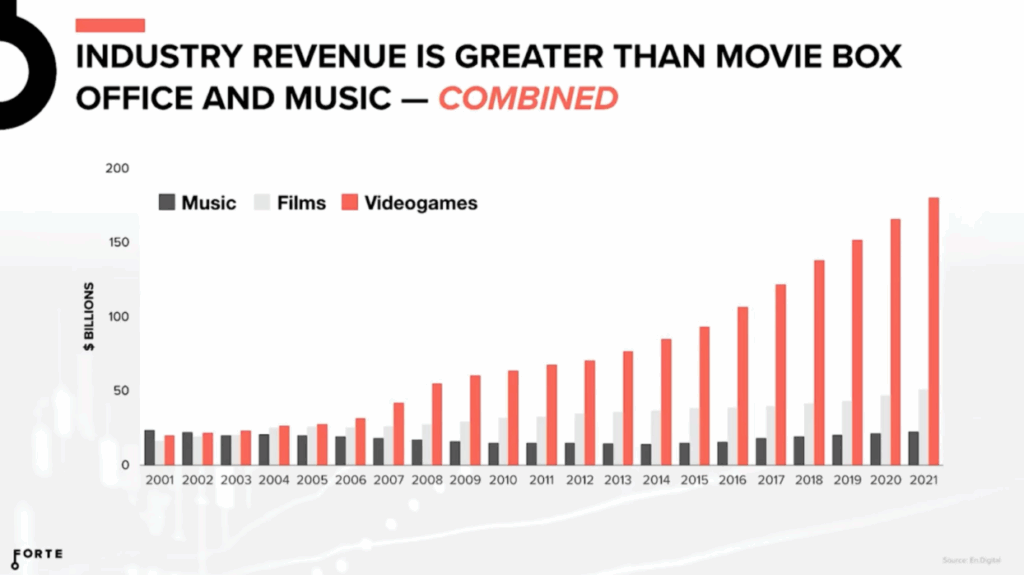
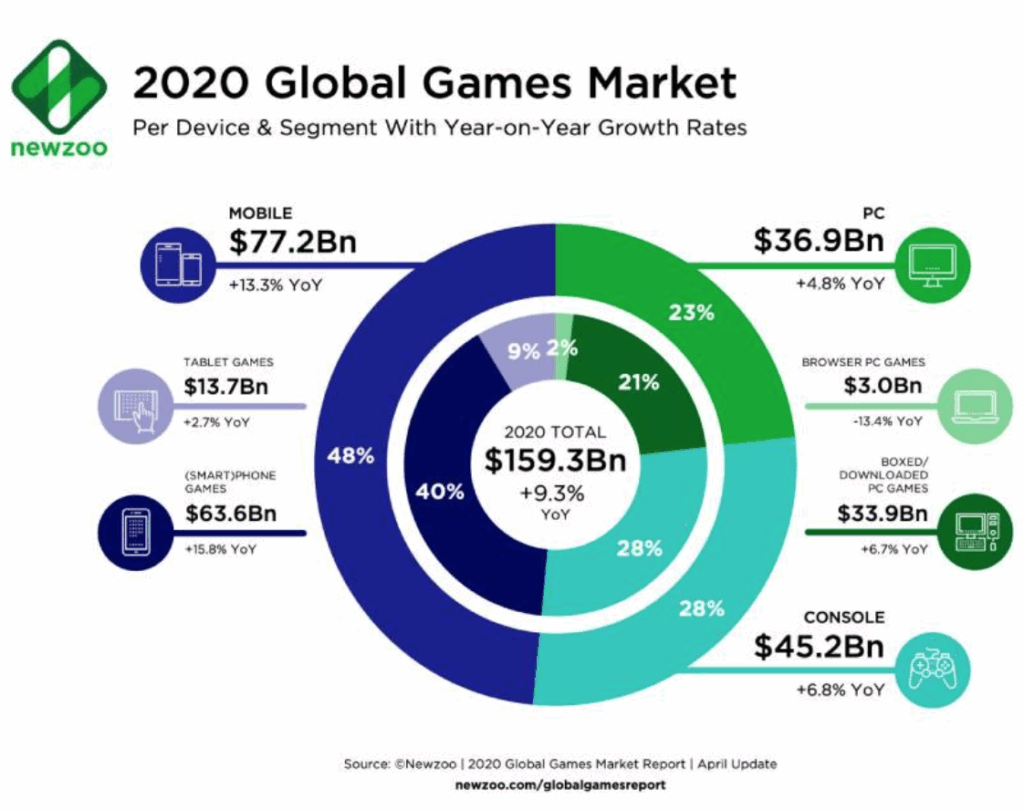
The video game industry has been generating more revenue than the movie box office and music industries combined over the last decade, reaching $159.3 billions in 2020.
The esports popularity keeps growing and it is expected to reach over half a million viewers in 2023.
Esports is the competitive side of gaming. I always explain it like this: a person juggling a football ball is not playing a football match. He’s using the same tools (football boots, the ball, might even use a net and a goalkeeper), but he is not competing against anyone other than himself. It is the same with esports: when you are playing video games against other people, in a competitive way, you can call it esports.
I would attribute that to 2 main reasons: the technological advancements of our society, that created the infrastructure needed (high speed internet, accessibility and affordability of video game consoles and gaming PC’s) for people to connect online like they were in an offline environment (no lag, no difference in ping, etc.) – vital for competitive integrity; the eager that human beings have to compete. Since the beginning of time humans are competitive animals in everything they do, so it is just natural that the same applies also to video games.
Tandhem Esports is an extension of Tandhem itself. Tandhem is a global talent agency, with expertise in athlete management and sports marketing. Tandhem Esports shares the exact same values and principles, but applied to the esports industry.
We aim to help semi-pro and pro esports athletes to achieve their goals, both professionally as well as personally. The majority of the athletes in the esports industry are very young and still very naive. They just want to compete and there is nothing wrong with that. We try to defend them from people who know exactly how to take advantage of that, giving them financial, legal and representation advice.
We see ourselves as partners of the players, more than their agents, in the traditional sense of the word.
They are aware of the phenomenon. They know that not entering now may jeopardize their business in the future.
Traditional sports are seeing their fans and viewership grow older as the time goes by. They need to do something to reverse the trend and one way to do it is to target the kids who give the majority of their attention to esports competitions, other than traditional sports ones.
Football and non-football sports institutions know this and see esports as an amazing opportunity to captivate younger audiences.
It is very difficult to tell which teams generate more revenue as the majority of them don’t disclose their annual income in full. One can only grasp and assume, based on the teams they build, the players they hire, the content they produce. Which is not exclusively related to the revenue they organically generate, because some teams survive via continuous outside investments from people still trying to enter the scene.
As of the games with more audience: League of Legends and Counter Strike have been producing top numbers for quite some time and I would consider them top 1 and top 2, respectively, based on the longevity of the numbers they’ve produced.
However, Fortnite and FIFA have been producing amazing numbers too, in platforms such as Twitch and Youtube, and it is very interesting to see what the future holds.
It is important to remember that there is a HUGE gap between the amount of professional teams in traditional sports compared to esports. Top esports players can earn multiple million dollar deals a year, but there are only a few of said players in the world, while in traditional sports it is rare that a player from a top league does not earn those amounts.
This is changing however, because esports players are more keen to create content and to share certain aspects of their daily routine (like training, exercising, habits), something that the younger fans want to see, because they want to emulate their idols.
Could you imagine the hype if Cristiano or Messi would train with a gopro on their heads? The world would stop to see it.
It depends on different factors, but right now I would say it would cost more than one million dollars a year. Two years ago, with talent from Europe (the best region in terms of talent besides the Asian market), you could build a great team with half a million a year.
The salaries increased a lot since the players perceived their power and how much they were generating for the teams just in exposure and stream numbers.
Currently, sponsors are the biggest source of income for team organizations.
I would say that TV Rights will play a huge role in the next 5-10 years, because only now the teams are understanding their importance to the Leagues: the Leagues capitalize on the teams’ exposure to close multi million dollar contracts with sponsors – League of Legends European Championship – LEC – is the biggest example of this.
Other than that, esports have the same revenue sources as traditional sports teams: merchandise, player buyouts, prize pools from tournaments, events’ ticketing, etc.
It is one of the best investments one can make still of today. Esports exposure will only go up, as more and more kids change their hobby habits to playing video games on a daily basis, because they now have the access to the technology (mobile phones, tablets, computers, consoles, etc.) that we didn’t have 5-10 years ago.
5G will also play a huge part in the dissemination of mobile competitive gaming, as we will only need our cellphones to be able to compete at the highest possible level, from anywhere in the world.
I believe that because all of this, associated with the streaming tools that exist today, in 10-20 years esports the number one sports in the world.