We
breathe
soccer
breathe
soccer

Why do you believe the FIFA World Cup is the biggest sporting event in the world?
Although the FIFA World Cup is held every four years, it manages to capture the attention of billions of people from all walks of life and embodies national pride while providing a platform for countries to not only show off their soccer talent but also their culture, history and passion for the game. The World Cup brings people together from all over the world and is the ultimate showcase of the beautiful game filled with the biggest stars vying for the ultimate prize. It is through the significance of the FIFA World Cup that we really understand why soccer is the biggest sport in the world.
What sort of global impact does the FIFA World Cup have across different societies?
FIFA World Cup brings people together and breaks down cultural barriers, racism and social inequality, while creating a sense of unity among different countries. As I experienced in Qatar, during the World Cup, the love for football is all that matters.
What is the economic impact of the FIFA World Cup?
The FIFA World Cup has a significant economic impact, both for the host country and for the global economy. During the tournament, the host country experiences a boost in tourism as millions of fans travel to attend the games, stay in hotels, and eat at local restaurants. This leads to an increase in local economic activity, such as job creation, and can help to boost the country’s overall economic growth.
In addition to the direct benefits for the host country, the World Cup also has indirect economic benefits through increased media exposure, sponsorship deals, and the sale of merchandise and memorabilia. These factors can help to promote the host country’s brand and attract further investment.
The FIFA World Cup is one of the most lucrative sporting events in the world, with the total revenue generated by the event estimated to be over fourteen billion dollars through broadcasting rights, sponsorships, and ticket sales.
What are the different types of stakeholders involved in the FIFA World Cup?
Typically, it would be the host country, FIFA, and LOC (Local Organizing Committee). FIFA is the governing body of the tournament and is responsible for organizing other events such as the Women’s World Cup, FIFA Club World Cup and others. The LOC is responsible for organizing different events such as the opening ceremony, promoting the tournament, and generating revenue; while the host country is responsible for organizing the tournament, providing training facilities and transportation during the competition. FIFA has 6 different continental confederations: AFC (Asia), CAF (Africa), CONCACAF (North and Central America and the Caribbean), CONMEBOL (South America), OFC (Oceania), and UEFA (Europe).
Read Monica Aguado’s, Humas Resources and CFO, insightful comments about the importance of corporate meetings on an era where remote work is growing fast and is not going anywhere anytime soon.
1. First of all, can you tell us about your job as HHHR & CFO Director?
I’ve been working with ISL since the company was founded, back when it didn’t even had an Human Resources structure. It has been a big challenge to create and shape this department; it definitely has been a learning experience and it’s amazing to see how far we’ve gotten. Part of my daily tasks also includes hand-in-hand work with the CEO preparing financial reports and tracking the cash flow which is crucial to make strategic decisions.
2. Taking into account that currently most of ISL’s employees work remotely, do you consider that corporate meetings are important?
During COVID times, ISL was introduced to remote work; nowadays most of the team works remote or hybrid. Because of this, many team members interact only virtually with the rest of the team. We consider that corporate meetings, now more than ever, are a must in our annual calendar of activities.
3. Which is the main objective of a corporate meeting?
The main objective of a corporate meeting is to boost physical and emotional experiences that we may lack in a daily basis. To achieve this, during corporate meetings we organize team building activities, meetings where we recap annual results and share future projections, luncheons and other interactive activities.
.4. How many corporate meetings a year do you think are necessary for ISL?
We’ve always aimed to held 2 corporate meetings per year and we hope to maintain this frequency, even though the company keeps growing and it’s hard to find a few days in the calendar where the whole team can meet.
Read Pere Segarra’s, our director of talent relationship, take on the current player market, the skills a Professional Player must have to thrive, and the importance of mental health in the football industry.
The market is on fire, especially in MLS. There have been two-star signings for LAFC: Gareth Bale (Real Madrid) and Giorgio Bellnini (Juventus), two European legends who will make a difference in this league.
And as for Europe, there have been several star signings such as Halaan, who has signed with Manchester City, and Pogba’s return to Juve.
Many American players have the potential to enter the European market.
European clubs are interested in having young American promises to make the club grow in the United States, it is a good marketing tool, and obviously, the talent in the United States is increasing.
2. What skills should have a Tandhem player to represent him?
We mainly value the player’s professionalism and his commitment to his career. We also highly value the player’s projection and talent, but his dedication is critical.
You must be mentally strong and aware that there will be times that are tougher than others. We also consider his education and his closest environment, which are a support rather than a burden on his way.
3. And regarding mental health, is it essential that high-performance athletes take care of it?
Mental health is a taboo subject among footballers, which is not talked about enough, and it is the key and the big difference between a professional and non-professional player.
I recommend it to any player who feels that he doesn’t know how to handle pressure well, criticism, who has more negative thoughts than usual…
Certain players are affected much more than others, and due to their ego, they prefer to keep this fight quiet, and all they do is harm themselves.
Resorting to professionals will always provide a more significant improvement than any advice from someone who is not specialized.
4. Do the big teams consider physical and mental health when they are interested in a player?
Yes, both aspects are of vital importance for the clubs. The scouts of any club monitor not only the player on the field, but also his mental state, which I mentioned before: his environment, family, education…
The clubs have it very present. They discard the player if they believe that the player is confrontational or will not fit in well in the locker room because of his behavior.
Talent is what weighs the most in the balance, but each case must be taken into account individually.
On a physical level, they also study if the player has any irregularity that could cause future injuries or reduce his performance. Many millions are invested for each footballer, and the team takes care of even the smallest detail so that the operation is successful.
After the announcement of the next friendly matches of FC Barcelona in the USA, we have sat Bruno Díaz, Director of ISL’s Tours & Friendlies department, in the hot seat to find out more:
1. First of all, tell us about your work as Director of ISL’s Tours & Friendlies department.
It’s very exciting to help the clubs organize their preseasons.
We work with European, American, and Latam clubs to find each region’s best potential-friendly games.
It’s an essential time of the year for the sport and commercial departments of the clubs.
2. What are the objectives of friendlies?
Friendly games are crucial from a sports and commercial point of view.
During this time, the teams prepare themselves for the next season.
Playing against teams from different countries is always interesting.
From a commercial POV, clubs use these international tours to create brand awareness and gain more fans worldwide.
3. We recently announced a friendly match. Do you think there will be more news this season?
After two difficult years of COVID restrictions, we will finally see a lot of international games in the US and Europe for our clients.
It will be a busy summer for our team.
4. Are these matches essential for clubs?
They all need to play games to be prepared for the next season, and commercially speaking, it’s always a good source of revenue for the teams and a perfect occasion to win over more fans abroad.
Joan Ocon, Director of Tandhem Representation Agency, explained to us the complexity of the soccer representation sector, the impact of COVID-19 , and the secrets to succeed as a Sports Agent.
Many dream of entering the soccer world as Player Agents. No early morning practices, best seats to the matches and millionaire commissions. Sounds like a dream job, doesn’t it?
That is only what you see on television, but behind it there is a job in which you do not rest, that you live far from your family and friends and from which you never disconnect. If you are able to assume these three concepts, you can take the first step. But only the first.
Can you explain what is really going on behind the scenes in one of the most competitive jobs in the sports industry?
As I said, this job demands a lot from you. Don’t let your guard down. The competition is fierce and if you want to survive, you must demand yourself the maximum every day. There are no schedules, there are no excuses, and there is no rest. You have to differentiate between two worlds. The formative and the professional. Both have really the same operations on a day-to-day basis but with a greater tension in the professional world.
You are the director of Tandhem, a Representation Agency, but you are also a lawyer. Why did you choose to enter the business of soccer representation/player management?
The question that everyone asks me. There was a time in my career as a lawyer when I realized that I was not born to sit in a chair for hours. I love law and I love sports, so I studied sports law, and thus step by step I entered this world.
Now that you are a Player Agent, does the reality correspond to your expectations? Why?
Although I am an agent, when asked, I always answer that I am a lawyer. It is something that has cost me years of dedication and that is part of my personal stamp in this profession.
What is the biggest challenge you face in your job?
To mark with my work team a style, a unique way of working and a unique philosophy. There are many representation agencies, therefore you have to seek excellence and make a difference. Tandhem has its own style and we must maintain it and enhance it day by day, that is the biggest challenge.
What is the biggest reward of being a Player Agent?
Work together with your player and achieve what we both have set out to do. It sounds easy, but it is not, because there are infinite risk factors. Gladly, I manage to achieve every goal I set with a player by working for it day by day.
What is the importance of press and social media in this business?
Today, it is key. Who does not know you, judges you by your social networks. Maybe before this didn’t happen, but now social media plays a leading role. Luckily, in our company we have a wonderful team of experts to help us and our players.
How did COVID-19 impact the players’ contracts and the transfer market in 2020?
The market is stopped. It should be borne in mind that the football market did not suffer the crisis of 2008, and that it has registered growth year after year until the Covid has stopped it. Salaries have also gone down and the disbursement for player transactions has been reduced by 70%, according to the information published by sports media outlet Palco 23.
Has player management changed with COVID-19?
There is a very important human factor in this work. If human relationships have been cut or reduced, that has affected work. Now it seems that we can travel more and meet with caution, hopefully we continue like this. It is very difficult to convince clubs and sports directors through a virtual meeting. Some clubs have also modified their methodology, replacing scouting travels by players’ data analysis to choose the new players. It is the first time in the soccer industry that clubs have given big data a leading role in recruiting players.
Do you get personally attached to the players or is it just business?
I do not like to give clues of what our style is. But in our case, the personal relationship with the player is key in our work. It is a business, yes, but the business is made up of people, we cannot treat players like trading cards. For us, they are our family. This is how we feel it and this is how they feel it.
What are your top 3 success rules?
Honesty, professionalism and ambition.
What is your best advice for someone who dreams of being a Player Agent?
It seems like a cliché, but in that profession I consider it essential. I would tell him not to give up. When you start and are small, there are many obstacles and everything seems to be a problem. Not giving up and being persistent is key.
Check out our latest projects!
Pepe Nogues is the Director of the Barça Academies managed by ISL across the USA.
Every year, Pepe organizes and coordinates a team of 6 people, responsible for 2,000 aspiring your soccer players in 6 different states of the United States.
The Barça Academy US includes boys and girls between the ages of 5 and 18, and offers all year long soccer programs and events and tournaments, with the goal of developing new soccer talent and spreading the FC Barcelona sports’ values.
Ever since the COVID-19 pandemic hit the world, the Barça Academy’s dynamic has been affected, as have most sports activities.
The esports popularity keeps growing and it is expected to reach over half a million viewers in 2023.
We have designed a pretty solid BA calendar that we use as guidance to plan and organize in advance for the following year/s. It is true that, since we operate in different states, different regulations apply, therefore adaptations also need to be made accordingly.
Well, when the pandemic hit and new safety measures were dictated by health departments and soccer federations, the whole operational model had to be quickly re-edited. Changes such as: carefully managing cash flows, adapting from tryouts to renewal strategies, expanding our customer base experience, rewriting policies… to make it short, almost everything changed in a way.
We received great support from FCB on the new coaching models that were applied through virtual training and online learning experiences.
There have been 3 major challenges I should point out:
1) Adapting our teaching & learning model to virtual trainings.
2) Creating a Covid Committee and adding experts on the matter.
3) Applying strict safety measures to get back on the field.
Timing was one of the biggest issues I faced. The quick decision making was critical because at the very beginning no one had the absolute truth on how things should be run. I had to quickly provide new guidance for my team, for them to provide guidelines to their staff, players and families.
Very strict safety measures were applied on the “get back to the field phase”. We literally looked like a moving hospital giving soccer lessons. We purchased so much sanitary equipment and materials that our coaches looked like doctors. Gloves, masks, sanitary stations, temperature check points, covid control cases, etc… It was a challenge but I can gladly say that we did an amazing job in this matter.
I have to give full credit to the local staff because they reinvented themselves. It was not only the leadership team providing new guidance, but technical directors and coaches reaching out sharing great thoughts and ideas to engage with players and families in this new and challenging adventure. It was definitely difficult at the beginning to get high rates of players’ attendance, but as we shared on social media how we were safely operating, players and families started to trust the method and found the strength to get back on the field despite the pandemic.
The pandemic and new operational model obviously raised a lot of questions and concerns to parents & families. They were mostly concerned about financial support and about the safety for their kids which we took very seriously and responded to the best of our capabilities. We have to THANK them all because a great deal of understanding and comprehension was shared by the majority of the families.
The impact of the coronavirus pandemic is far more severe than many people want to recognize. We do still face challenges that the pandemic continues to present such as cancelling very important regional and national tournaments that are critical for completing the competitive cycles, or directly affecting international travel which blocks players and families from discovering and experiencing different soccer cultures.
João Carvalho is a die hard fan of esports and an expert in the matter.
He was the Founder of Prémios Esports Portugal (Portuguese Esports Awards) and has been working with the esports industry for 10 years.
We asked him to explain to us what esports are and how they have grown so fast, to tell us about the leading esports games, and to share his insights from a business perspective.
But before, let’s take a look at the latest facts and numbers about esports and the video game industry:
The video game industry has been generating more revenue than the movie box office and music industries combined over the last decade, reaching $159.3 billions in 2020.
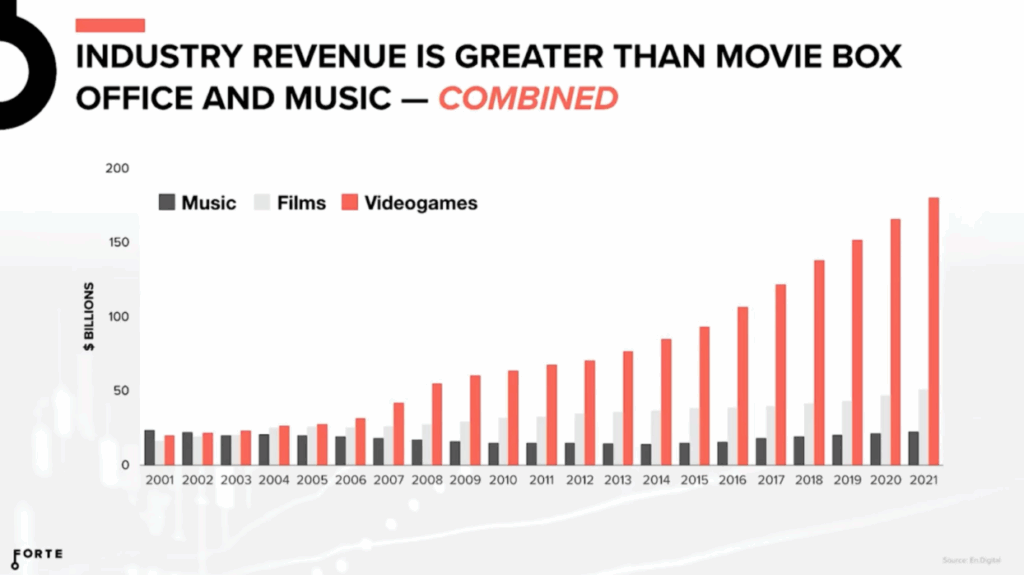
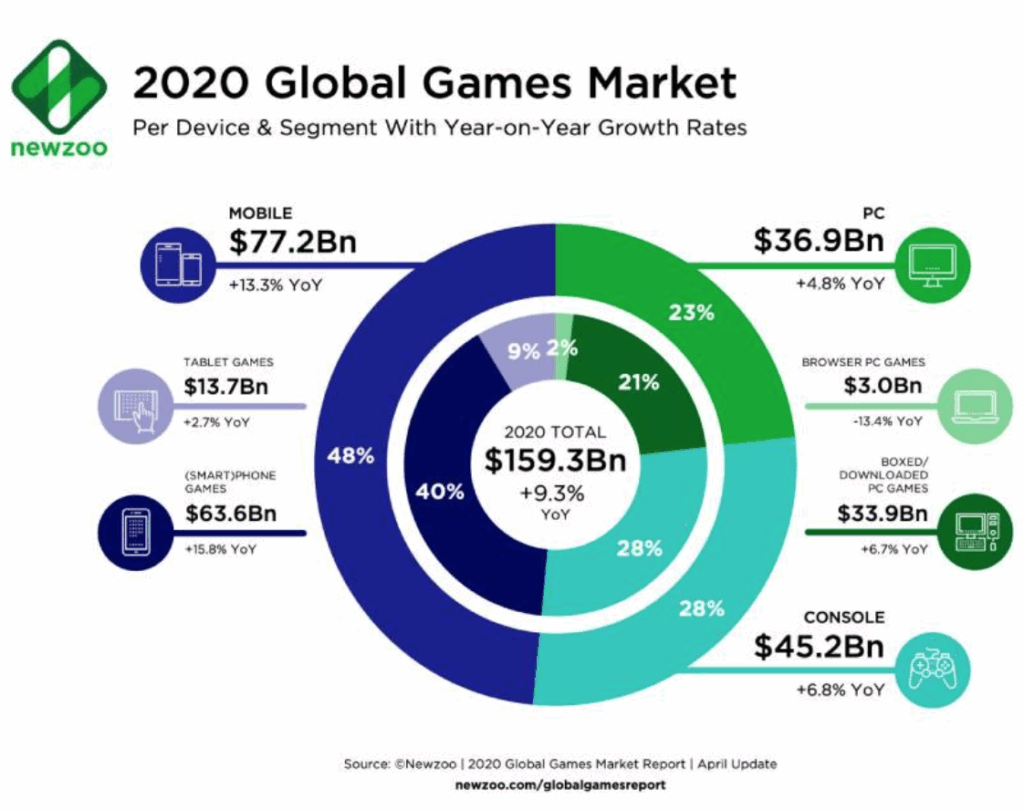
The esports popularity keeps growing and it is expected to reach over half a million viewers in 2023.
Esports is the competitive side of gaming. I always explain it like this: a person juggling a football ball is not playing a football match. He’s using the same tools (football boots, the ball, might even use a net and a goalkeeper), but he is not competing against anyone other than himself. It is the same with esports: when you are playing video games against other people, in a competitive way, you can call it esports.
I would attribute that to 2 main reasons: the technological advancements of our society, that created the infrastructure needed (high speed internet, accessibility and affordability of video game consoles and gaming PC’s) for people to connect online like they were in an offline environment (no lag, no difference in ping, etc.) – vital for competitive integrity; the eager that human beings have to compete. Since the beginning of time humans are competitive animals in everything they do, so it is just natural that the same applies also to video games.
Tandhem Esports is an extension of Tandhem itself. Tandhem is a global talent agency, with expertise in athlete management and sports marketing. Tandhem Esports shares the exact same values and principles, but applied to the esports industry.
We aim to help semi-pro and pro esports athletes to achieve their goals, both professionally as well as personally. The majority of the athletes in the esports industry are very young and still very naive. They just want to compete and there is nothing wrong with that. We try to defend them from people who know exactly how to take advantage of that, giving them financial, legal and representation advice.
We see ourselves as partners of the players, more than their agents, in the traditional sense of the word.
They are aware of the phenomenon. They know that not entering now may jeopardize their business in the future.
Traditional sports are seeing their fans and viewership grow older as the time goes by. They need to do something to reverse the trend and one way to do it is to target the kids who give the majority of their attention to esports competitions, other than traditional sports ones.
Football and non-football sports institutions know this and see esports as an amazing opportunity to captivate younger audiences.
It is very difficult to tell which teams generate more revenue as the majority of them don’t disclose their annual income in full. One can only grasp and assume, based on the teams they build, the players they hire, the content they produce. Which is not exclusively related to the revenue they organically generate, because some teams survive via continuous outside investments from people still trying to enter the scene.
As of the games with more audience: League of Legends and Counter Strike have been producing top numbers for quite some time and I would consider them top 1 and top 2, respectively, based on the longevity of the numbers they’ve produced.
However, Fortnite and FIFA have been producing amazing numbers too, in platforms such as Twitch and Youtube, and it is very interesting to see what the future holds.
It is important to remember that there is a HUGE gap between the amount of professional teams in traditional sports compared to esports. Top esports players can earn multiple million dollar deals a year, but there are only a few of said players in the world, while in traditional sports it is rare that a player from a top league does not earn those amounts.
This is changing however, because esports players are more keen to create content and to share certain aspects of their daily routine (like training, exercising, habits), something that the younger fans want to see, because they want to emulate their idols.
Could you imagine the hype if Cristiano or Messi would train with a gopro on their heads? The world would stop to see it.
It depends on different factors, but right now I would say it would cost more than one million dollars a year. Two years ago, with talent from Europe (the best region in terms of talent besides the Asian market), you could build a great team with half a million a year.
The salaries increased a lot since the players perceived their power and how much they were generating for the teams just in exposure and stream numbers.
Currently, sponsors are the biggest source of income for team organizations.
I would say that TV Rights will play a huge role in the next 5-10 years, because only now the teams are understanding their importance to the Leagues: the Leagues capitalize on the teams’ exposure to close multi million dollar contracts with sponsors – League of Legends European Championship – LEC – is the biggest example of this.
Other than that, esports have the same revenue sources as traditional sports teams: merchandise, player buyouts, prize pools from tournaments, events’ ticketing, etc.
It is one of the best investments one can make still of today. Esports exposure will only go up, as more and more kids change their hobby habits to playing video games on a daily basis, because they now have the access to the technology (mobile phones, tablets, computers, consoles, etc.) that we didn’t have 5-10 years ago.
5G will also play a huge part in the dissemination of mobile competitive gaming, as we will only need our cellphones to be able to compete at the highest possible level, from anywhere in the world.
I believe that because all of this, associated with the streaming tools that exist today, in 10-20 years esports the number one sports in the world.
Albert Balsells is the Barça Academy Soccer Camps director for the USA.
Every summer, he organizes and coordinates 25 Soccer Camps that gather over 4.500 young players to learn the methods and values of the famous La Masia, where FC Barcelona legends like Messi and Xavi grew up.
This year, he had an impossible task: to organize the soccer camps events in the middle of a global pandemic.
Against all odds, Albert managed to minimize the impact of Covid-19 and adapt fast to ensure maximum safety for the players and their families, thus guaranteeing the kids would still be able to enjoy the best soccer summer experience in the country.
In 2020, Barça Academy USA held 14 Soccer Summer Camps for children between the ages of 6 and 16, registering a total of 1.500 participants and zero Coronavirus infections.
How did Mr. Balsells pull this off? That’s what we are going to find out:
At the start of each season we implement a timeline in which my team and I assign ourselves tasks to do throughout the year in order to have everything ready prior to camp commencing, although this year everything changed at the beginning of March due to COVID-19.
From March until the end of the camps we changed a lot of things and designed a contingency plan to know how to act considering different scenarios. The work done by the ISL staff was outstanding, considering the difficult situation we had to endure. Supporting each other was one of the most important things to keep working as a team.
The biggest challenge for me and my team was that the situation was changing every day. Originally we had planned 25 camps, but ultimately ended up doing only 14 due to state restrictions & regulations. In addition, we had to monitor daily how the covid situation was evolving in each state and what were the updates from the government.
We focused on safety measures on the field but also off the field, as in some camps we could have 300 people at one facility. We were very explicit in our communication with families and players to ensure that they maintain social distancing, wear masks, adhere to different drop off and pick up times and wash their hands periodically. We also cleaned the soccer material daily, distributed cleansing gel, etc.
A positive thing that we take from the camps is how people cooperate all the time, not just the players that were fantastic, but also our staff that was incredible at understanding the situation at all times and always being there to help each other. We couldn’t have done camps this summer without them and we are very grateful to all of them.
As you can expect in this situation, families were worried about the safety of their children, that’s why one of the keys to success was communication with all of them. We designed safety protocols which we shared with all the families weeks before the events started.
In a situation where every phone call can carry bad news because something happened, my advice would be to stay calm and act accordingly. At the end of the day as a person you can’t stop a pandemic by yourself, you can only imagine and plan different scenarios and be ready to act whenever you have to. Another very important thing is to support your team, at the end 5 brains think more than 1 and it’s important to trust them.
We are very excited for 2021 and we hope we can run the camps without any restrictions. Besides the soccer experience, we want the players and families to have fun on and off the field. We are already thinking of big surprises for the players, if we can do the camps normally.
Alex is a mastermind oriented to success. His efficient business skills come from prestigious schools such as ESADE (Master’s Degree) and Winthrop University (Bachelor of Science in Business Administration).
Alex is also a professor at ISDE Law & Business School, where he teaches a Master’s Degree class. This month, his class will be about Risk Management and Human Resources, the trending topic itself considering the current global pandemic crisis and the second lockdown in many european countries.
So, we went ahead and asked him some questions about it:
The increasing exposure to the effect of numerous risks, such as Covid-19, has made risk management a key activity in sports organizations. How a business identifies, evaluates, and faces the risk is crucial to overcome challenging situations.
Create a risk aware culture
Continually re-assess risk
Plan, plan, and plan
The Covid-19 had a big impact in our organization, especially to our travel management side. Our priority has always been the health and safety of our team and our customers. That’s why we had to change how we do things internally, but also the way we interact with our clients and partners. We have embraced a digital ecosystem to offer more customized and enriched digital experiences. Some of our tradicional services have been on hold for several months but the adaptability of our team has been outstanding. We look forward to returning to normality in the next upcoming months.
One of the main challenges we have as a sports organization is that we require a large workforce for an intense period of time. Every time we organize an event such as a tournament, a preseason tour, or a sponsorship activation, we need to hire new people that will stay with us for a few weeks or even days. The rapid increase and decline in staffing within a short period of time is a complex human resource challenge. Finding and retaining talent is also one of the most significant managerial challenges.
I would say both. As I said previously, human resource management can be very challenging in sports organizations. Shortage of staffing or a lack of training in our team can be a source of risk. However, thanks to our people we can also mitigate a lot of risks and solve challenging situations.
I wouldn’t say risky, but challenging. As a global company that operates in several countries, we have our team spread in different parts of the world. Having a great communication structure in place and setting up very clear individual and team goals is key for the company’s success.
In my opinion there are several key factors that we need to achieve in order to have a successful talent acquisition and retention process:
During this time of uncertainty, managers of sports organizations are being forced to make tough decisions to minimize the impact of the Covid-19. Most of the time we believe that reducing our staff is the only solution, but there are many other ways to face this economic downturn. We would be surprised how versatile our teams can be if we are creative and innovative. The ability of the managers to find new opportunities and adapt quickly to the new context will determine the future of the company.
Sports transcend boundaries and borders, becoming a pivotal factor for travelers when selecting their destinations, offering tourists distinctive and memorable experiences. Our Brand Manager, Carlos Ramírez, delineates the sector’s rapid growth and our contribution to its expansion through a range of personalized soccer programs available year-round.
The World Tourism Organization states that sports tourism is one of the fastest-growing sectors in the travel industry. What factors do you believe contribute to this growth?
There are several factors which contribute to the rapid growth of sports tourism. The increasing popularity of sports globally has led to a rise in interest from travelers seeking to participate in or witness sporting events firsthand.
On the other hand, the desire for unique and memorable experiences drives individuals to incorporate sports into their travel plans, thus contributing to the sector’s growth. In many cases, sports have indeed become the deciding factor when choosing a travel destination, whether it’s to participate in an event, attend a game, visit a team’s stadium, and so on. This reason has turned sports into a significant attraction factor that enables certain tourist destinations to draw in new travelers and enhance their international brand.
And how sustainable do you think this growth is?
Major sports brands and competitions have achieved global recognition, transcending geographical boundaries to captivate audiences globally. With sports properties increasingly striving to extend their reach beyond national borders, the potential for sustained growth is enormous.
According to a study by the Barcelona Tourism Observatory, sports tourism accounts for nearly 20% of all visitors to the city. What’s ISL’s participation in this statistic?
The ISL Experience Team hosts various BSE (Barcelona Soccer Experience) trips each year for young soccer players from the US. During the current season, we will host a total of 5 BSE sessions for boys and 2 sessions which are exclusive for girls. Our partnership with FC Barcelona enhances the authenticity and appeal of these experiences, making us a key player in driving sports tourism to the city. Since 2015, over 6,000 young boys and girls and more than 15,000 people overall have traveled to Barcelona as part of our soccer programs, including players and families. The number of travelers continues to increase every year.
In which other cities does the Experience Department organize experiences?
Apart from Barcelona, the ISL Experience Department organizes other soccer experience programs in iconic cities like Madrid, Manchester, Lisbon, and Paris, among others. These destinations offer rich sporting heritage and vibrant cultures, providing travelers with immersive and unforgettable experiences beyond the pitch. We are also present in some of the most important youth soccer tournaments which offer our players the chance to test their level among the best in a competitive environment.
From your point of view, what is the main thing players coming via Futbol First look forward to in their trip?
In my opinion, what players and families traveling with Futbol First are seeking is to live a unique sports experience in every way. From experiencing training sessions with the best academies, such as FC Barcelona’s, and watching their team and idols play live, to facing local teams in friendly matches that allow them to test their level and enhance their experience. In addition to this, our trips always incorporate a cultural element through guided tours, which add an educational component that we consider key to providing a comprehensive experience.
How do football clubs benefit from sports tourism? Which new opportunities and revenue sources open up?
Football clubs benefit from sports tourism in various ways. Firstly, it allows clubs to expand their global fan base by engaging with supporters from different regions through international tours, friendlies, and fan experiences. Additionally, sports tourism opens up new revenue streams through ticket sales, merchandise purchases, sponsorships, and partnerships, further enhancing the club’s financial sustainability and brand recognition.
ISL has been tapping into this sector for many years now. How do you assess the Experience Department’s evolution over the past decade?
Over the past decade, the ISL Experience department has evolved significantly. We have refined our trip itineraries, diversified our destination portfolio, and incorporated innovative internal changes to streamline operations and deliver unparalleled service to our clients. Our commitment to excellence and continuous improvement, with special attention to detail, ensures that ISL remains a leader in sports tourism, providing transformative experiences for players and families alike.
How is the preparation for the new season coming along? What can we expect?
At the moment, we are working on the updates for the upcoming season, which for us begins in mid-June. Looking ahead to next year, our focus is on continuously incorporating innovations into our programs to offer an even better service and provide an enhanced experience for our clients. In this regard, we believe it is very important to listen to the opinions of the players and families who travel with us each year to understand what they like most and where they see room for improvement. This ongoing dialogue with our clients serves as the guiding principle to achieve excellence in everything we do.